Jean - Louis Dolliole
- Janae Long
- Jul 15, 2022
- 2 min read

Updated: Aug 23, 2022
The Freedman’s Contribution to New Orleans Architecture: Jean – Louis Dolliole
"Not only was he a well-respected designer of his time but was also a soldier, a real estate investor, and a savvy entrepreneur."
There was a time during antebellum slavery when enslaved Africans could obtain their freedom in New Orleans through their birthright or manumission. During the New Orleans Colonial period, under the Spanish, as many as 1500 enslaved Africans became free through the two avenues mentioned above. During this time, they created a rich social-economic culture and contributed to the creation of the city through their hard work and innovative thinking. Many freedman[1] held jobs like their white counterparts, such as manufacturing, carpentry, owning real estate, construction, and architectural design. Yes, ARCHITECTURAL DESIGN!! Though many freedman played a huge role in the construction and creation of the Creole Style home, I would like to highlight particularly one designer whose work is still standing in the present-day, NOLA.
The son of a freedwoman of color and a French migrant, Jean-Louis Dolliole was instrumental to the creation of the New Orleans built environment. Like many freedman1 builders, Jean-Louis had his own spin on what is called the “creole cottage”; a single-family residence style of architecture created by free people of color that consisted of a mixture of French and Spanish architectural styles. His rendition often included incorporating French design elements like the triangular roof trusses and large glass French doors. His signature style was creating deep overhangs as far as five feet deep. His work can be considered sustainably conscience as he used local materials for the exterior of the building like brick and wood of cypress or pine.
Pictured below is the single-family four-bay creole cottage built by Jean Louis in the early 1800s. The property is located on Phillips St. next to the family home his mother had purchased in 1794. The four-bay cottage layout is two rooms wide and two rooms deep with a central chimney. The cottage’s exterior consists of mango yellow stucco with a tiled high-pitched roof and door and window shutters, typically found on the exteriors of New Orleans homes.

The Dolliole Clapp house located on 1436 Pauger St. in the French Quarter has an unusual spin on the creole cottage. This home is where Jean Louis and his first wife and 3 children resided. In most urban settings, the creole cottage has a hipped- roof but this property was designed with a pan-tiled gable roof and is pentagon in shape, instead of the typical square.

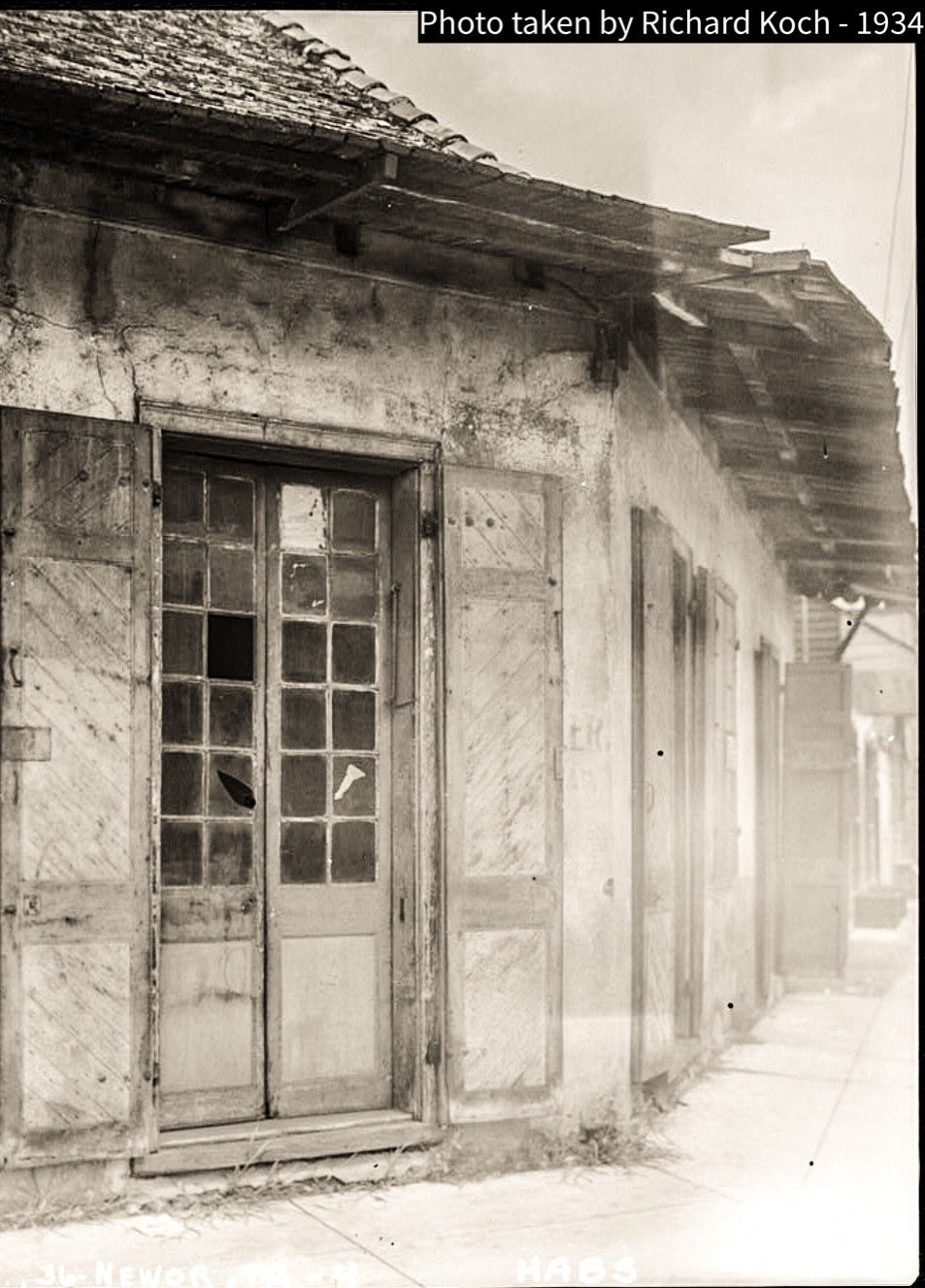
Not only was he a well-respected designer of his time but was also a soldier, a real estate investor, and a savvy entrepreneur. The Dolliole Family strategically helped each other acquire land despite the strict civil codes of that time. The code would only allow illegitimate children and spouses to obtain one-third of owned real estate. Due to his unique family background consisting of three brothers from both parents and three half-sisters from his mom, the Dolliole family made sure that everyone had fair ownership of the family’s properties. They would often transfer properties among each other and to the extended family members. At the time of his death in 1861, Jean-Louis's real estate portfolio consisted of 7 properties totaling around $320,000 today.
[1] Freedman: A person freed from slavery.


Comments